Friday, April 16, 2010

FROM THE ARDECHE TO THE JURA


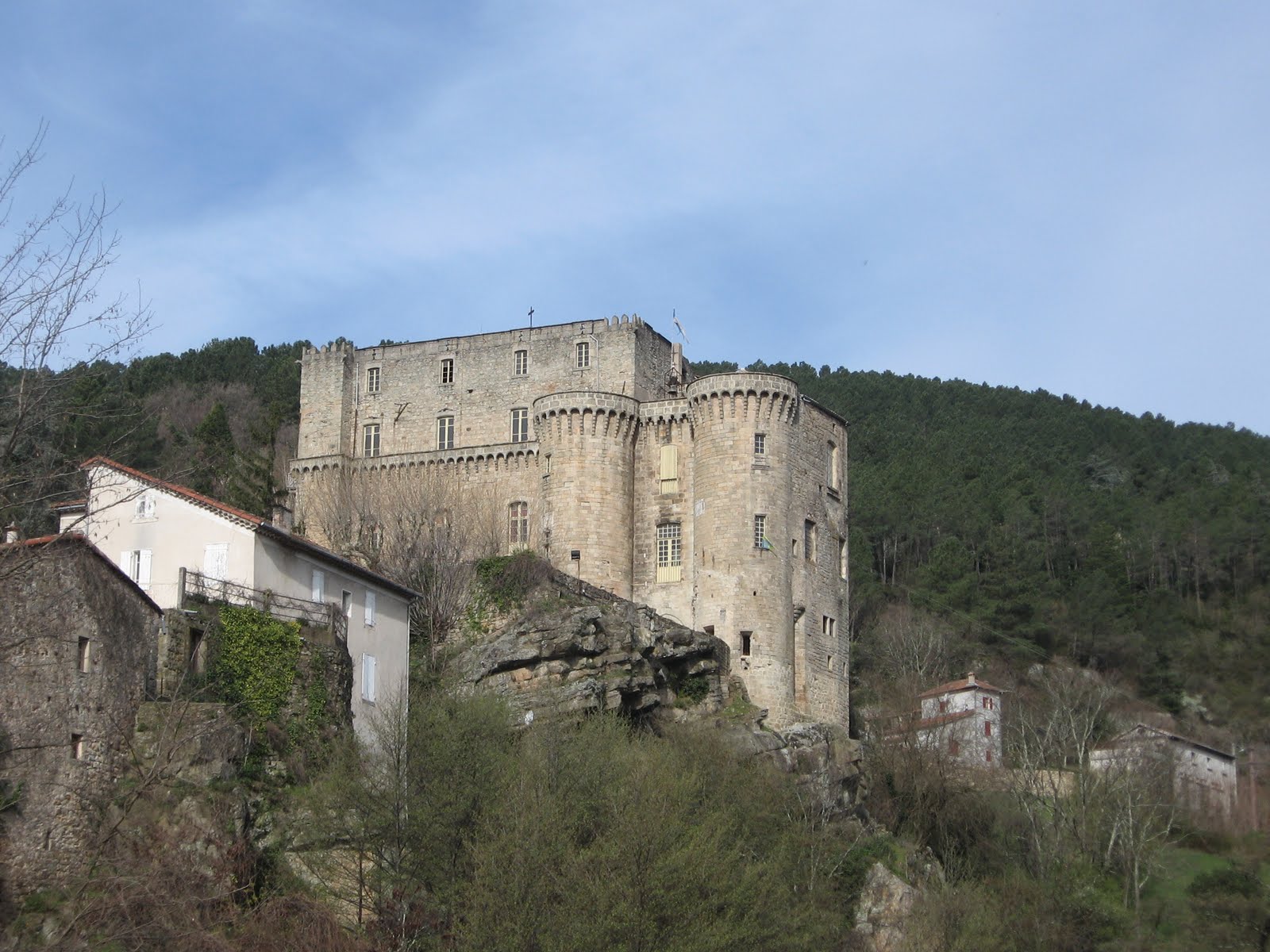
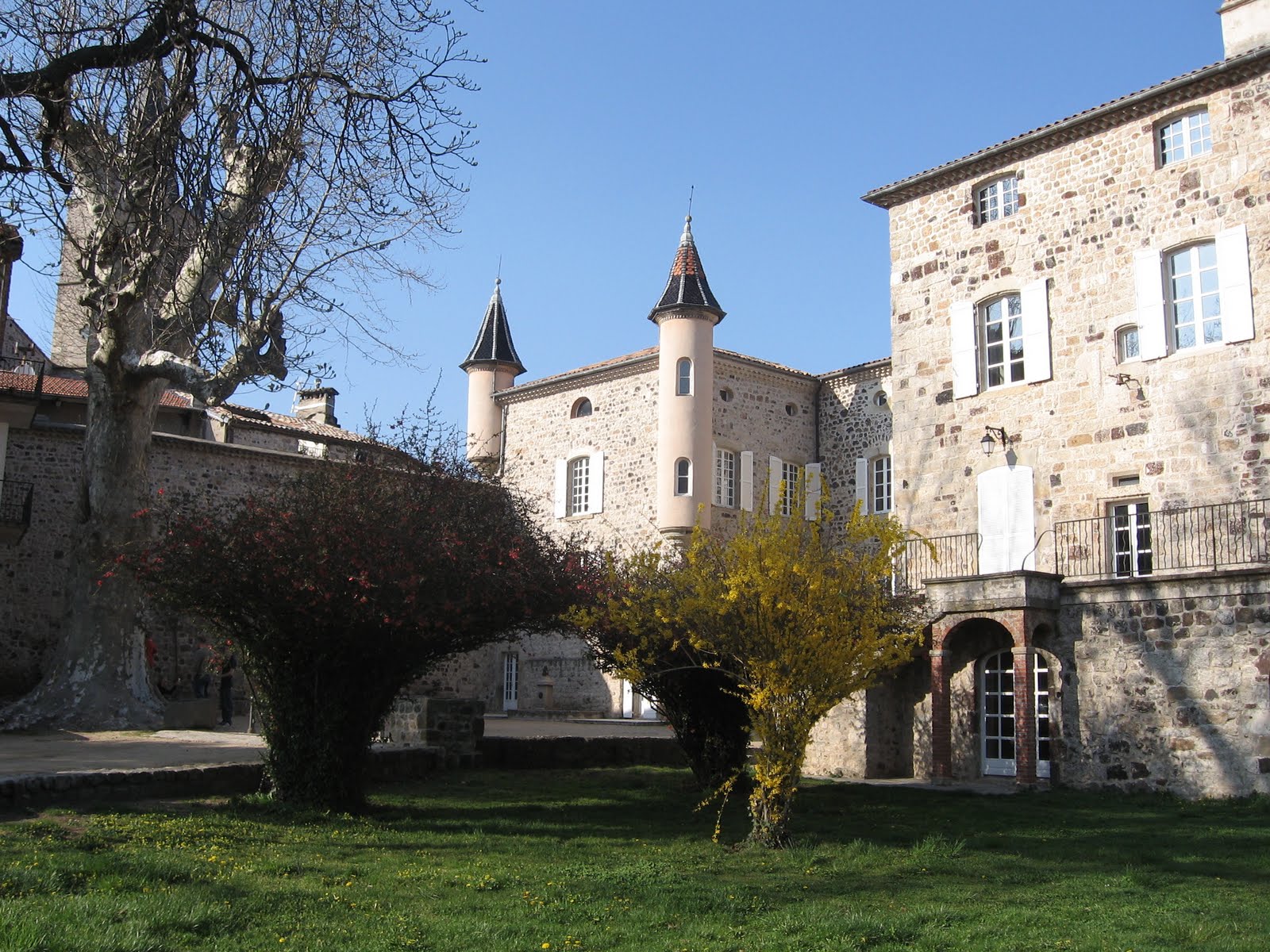
  First, a few more photos from the Ardeche that I didn't have time to post yesterday.
                 Meyras:
          Thueyts:
Ruoms:


             On Saturday, April 10, we left the Ardeche and drove to the Jura. Our first planned stop was at the Cave de Sarras wine cooperative in the northern Ardeche, which we knew closes for lunch at noon. We figured we’d just make it, but there were several traffic delays after we got off the main road. We pulled into the parking lot at the Cave at about one minute before noon, and to our horror we saw that the metal grate at the entrance was just starting to roll down. So we missed it by less than a minute.


            After driving out of Sarras, we decided to take another detour, this time to a village, which we knew wouldn’t close for lunch! We stopped at Perouges, one of the Plus Beaux Villages de France (Most Beautiful Villages in France), and took a brief stroll around the village. We then headed off to our gite in the Jura, in the tiny village of Brainans, arriving right on time to meet the owners. Brainans is a tiny village with a church high up on the hill overlooking the village. From the road outside our gite there is a good view of the church and its clock tower, with a vineyard between the church and the road:


        We later drove to the nearby commercial center of Poligny, where we stocked up on some provisions. That night, we drank the Cremant de Jura from Domaine Boisson that was given to us by the gite owners. Most producers in the Jura make sparkling wines, with the AOC being Cremant de Jura. The Boisson Cremant, like many sparkling wines from Champagne, was made from a Chardonnay/Pinot Noir blend, and it was a dead ringer for a good Champagne. Jura sparkling wines are rarely seen outside the region (although one, Domaine Rolet “Couer de Chardonnay,” is available in Maine), and the best rival most Champagnes at a fraction of the price.


          We spent the next morning in Arbois, a modest-sized town that is the center of the Jura wine region, and stopped at the tasting room of Domaine Rolet Pere et Fils. We tried a full range of their wines, and bought a Vin de Paille and a Cote de Jura that was 100% Savagnin grapes. This Savagnin was made in the traditional oxidized, oaky style of Jura Savignans, not dissimilar to a fino sherry. After lunch at our gite we returned to Arbois via back roads along the Routes des Vins, visited the wine museum there, and went to 2 other tasting rooms: Domaine Andre et Mirielle Tissot, and Domaine Jacques Tissot. We both thought the wines of the first Tissot, now run by son Stephane, were rather bizarre and not to our liking. But we loved the wines of Jacques Tissot, and bought 3 of their wines: a Cremant de Jura Brut; a Vin de Paille; and an Arbois Savagnin “Nature,” which was a fresh and fruity wine made in the newer style of Jura Savignans, which emphasizes fruit and avoids oxidation and excessive oak.

  For more info on Jura wines, here are some sites:
http://www.laroutedesvinsdujura.com/en/
http://www.jura-vins.com/vins-jura-gamme.htm

Thursday, April 15, 2010

MORE FROM THE ARDECHE


  A prior posting about the southern Ardeche covered through the first part of our week there. The latter part of the week involved drives to a number of small villages scattered throughout the hills of the Ardeche, visits to a few more wine producers (plus 2 more stops at Domaine Mazel), and a couple of trips to market towns.

  On Thursday afternoon, after going to the morning market in Vallon Pont d’ Arc, we drove towards the Cevenne Ardechoise hills, first stopping in the village of Vinezac, so named because of all the vineyards surrounding the village. After Vinezac, we stopped at the small village of Faugeres, where winemaker Jerome Mazel’s mother hails from. The village is dominated by a church, with spectacular views to the surrounding countryside.


The next morning we went to the market in Ruoms, where we bought a large supply of fromage de chevre from a local goat cheese producer, as well as a bottle of 2005 Domaine des Vigneaux “Peyrol” Vin de Pays Coteaux de l’Ardeche, a 100% Syrah wine aged for 1 year in oak. I didn’t know anything about the wine, but the wine seller, who seemed to be partaking of plenty of his wares, highly recommended the producer. We had it a few days later with dinner, and it was outstanding; a complex, smooth red wine on a par with just about any northern Rhone Syrah wine I’d ever had.

Friday afternoon we took a long drive, through the larger towns of Aubenas and Val-les-Bains and then up into the hills to several small villages: Antraigues, Meyras, and Thueyts. These 3 village, along with a few others we visited, are officially designated as Ardeche “Villages of Character.”
                                          Antraigues, a hilltop village:

 
                                                Meyras:
      
                                                         Thueyts:


             We finished the day, our last full day in the Ardeche, with another stop at Domaine Mazel, where Jerome’s father had just put a printout of my web posting about the domaine in a sleeve for display in the cave/tasting room. We chatted with Mazel pere et fils one more time, bought some more wine, and said au revoir. The next morning we left the Ardeche after one more brief stop at ... not Domaine Mazel ... Ruoms for some photos

  To be continued (with more photos) when I get faster Internet service, hopefully tomorrow ......

Friday, April 9, 2010

DOMAINE MAZEL - JEROME MAZEL, MASTER VIGNERON

            Historically, the southern Ardeche was not known for its wine, and what wine there was was almost exclusively produced at the various local cooperatives.  Today, while the cooperatives still produce about 90% of the region’s wine, more and more independent producers are becoming known for the quality of their wine.

            One producer that is leading the charge is Domaine Mazel, located in the village of Pradons, whose winemaker, Jerome Mazel, is on his way to establishing himself as one of the top vignerons in the southern Ardeche.  The Mazel property has been in the family for several generations, but until recently the grapes from the estate were sold to the cooperative in nearby Ruoms.  Then, seven years ago, 21-year-old vigneron Jerome Mazel decided to turn the family domaine into an independent wine producer.  After completing his studies in Carcassone, Jerome had apprenticed at several wineries in the Rhone, including Domaine de Tunnel in the Cornas region.  He then returned to Pradons and set about remaking the domaine.  With help from his family and friends, Jerome spent four years renovating the property, adding winemaking equipment, and planting additional vines.


            Then, three years ago, Jerome was able to begin making and bottling wine at the estate.  When we visited in April 2010, Jerome’s parents started the tour for us, explaining the winemaking process at the estate.  They explained that the southern Ardeche has been known for making simple wine for everyday drinking, but Jerome decided to make more complex wine, cutting back on yields (to a very low 20 hectoliters/hectare) to make more concentrated wine.  Part way through the tour, Jerome joined us, and then took us into the cave for tasting.  We tasted the entire range of the domaine’s wines, 8 in all: 3 whites, 2 roses, and 3 reds.  There were 2 dry whites from the 2009 vintage – a Viognier (called Odyssee) and a Chardonnay (called Alter Ego).  Both were aged for several months in 3-year-old oak barrels, which gave each of them just a slight bit of extra complexity without dominating the flavors of the grape.  We then tried 2 roses from the 2009 vintage - a traditional dry rose, called Ribambelle,  made from a blend of Grenache, Syrah, Merlot, and a little bit of Cinsault; and a slightly sweet rose, called Chamboultou, made principally from Grenache grapes and intended to be drunk as an aperitif.  Both roses were made by the saignee method – bleeding off some of the juice from grapes intended for red wine.  We had the Ribambelle with lunch the next day; it was perfect with olives, tapenade, and goat cheese.


            After the roses we tried the range of reds from the 2008 vintage.  The first, called Coeur de Pierre (Heart of Stone) was mostly Grenache, with a little Merlot.  The second was a 100% Syrah wine called Magie Noire (Black Magic), a rich, complex wine with some ageing potential.  We had it with steak the next night, which was an outstanding match.  The final red, Corps et Ame (Body and Soul) was mostly Merlot, with a little Syrah added.

            To finish the tasting, Jerome poured a late-harvest Viognier from the 2009 vintage called Equinox, named for the autumnal equinox, which is when the grapes for this wine are generally harvested.  This medium-sweet wine would be great as an aperitif, or, as the winemaker’s mother noted, with foie gras.  Although we didn’t find any foie gras the next day, we did buy the nearest thing, duck liver mousse, and it was a perfect match.


            A couple of days later we returned to Domaine Mazel to buy some more wine and chat with the winemaker and his father.  Jerome discussed his grape growing and winemaking philosophy a little more. He also told us that for now, almost all of their wine is sold right at the domaine, with just a few restaurants and one shop carrying some of their wines.  Jerome also gave us some literature and write-ups about the estate.  Domaine Mazel’s wines have won numerous gold medals throughout France, and have garnered much praise from the top French wine publications.  Based on what we tasted here, I expect that eventually their wines will be discovered in the United States.

Wednesday, April 7, 2010

THE SOUTHERN ARDECHE

            We left Lyon on Saturday, April 3, and after a stop at a wine producer in the northern Ardeche, we drove to our gite in Pradons, in the southern Ardeche, where we would be spending the next week.  The next morning, Easter Sunday, we did some food shopping in the nearby town of Ruoms.  After lunch at our gite, we drove a little south to La Bastide de Virac, where we visited the Chateau de Roure, which dates from the 12th Century and was inhabited continuously until the 20th Century.  It’s now run as a museum, and we took a tour of the chateau, which included an explanation of the silk worm industry.  Silk production was a major industry in the southern Ardeche for several hundred years, and the chateau was a major silk producer.  The industry died a number of years ago, although attempts are being made to revive it.


     On the way back to Pradons we stopped in the village of Sampzon and drove into the hills, then drove by the Chateau de Sampzon at the foot of the village.
            Monday morning we took a walk from our gite, and crossed the main road into the village center of Pradons.  After passing through the center of the village, we took a detour at Domaine Mazel, a wine producer that had been recommended to us last year, as well as by the owner of the gite we were staying at.  We tasted their wines, accompanied by young vigneron Jerome Mazel and his parents.  I plan to write something more detailed about the wines later, but for now, it’s sufficient to say that all the wines were outstanding.
            That afternoon, we took a drive to Alba la Romaine, where we visited the village as well as the nearby Roman ruins.  In Alba we were greeted by a friendly village cat.

            After leaving Alba, we drove through the hills towards Saint Montan.  The drive was somewhat hair raising, as a good part of it was on narrow roads where there was barely enough room for oncoming cars to pass.  But when we saw the village of Saint Montan, it made it all worthwhile.  Saint Montan is a fortified village perched high on a hill overlooking the river, and  the view from below up to the town is spectacular.

            The next morning we drove to Largantiere, a town to the northwest with a chateau and a Tuesday morning market.  We spent a good part of the morning wandering around the town and the market, picking up provisions for lunch and taking a walk up to the chateau.
After leaving Largentiere, we drove out of town towards Montreal, a nearby town with another chateau.  What should have been a short drive took ages, as a good part of it was along a narrow road that we hoped would come out on a real road (it did).  We then finished the drive to Montreal, which, besides the chateau, had a friendly cat and a pretty town square.
           
             We then drove back to our gite for lunch, and in the afternoon we drove to Ruoms, parked, and took a marked walk down to and along the Ardeche river, and then back up along the gorges.  It was far more arduous than we had expected, and if it wasn’t for some assistance from another walker who knew how to navigate he cliffs along the river, we might have had to turn back halfway through. 
 

Friday, April 2, 2010

A few days in Lyon

    Just a few of the high points of our 3 day stay in Lyon.

    Les P’tits Peres, an excellent restaurant in the heart of Lyon recommended by the owner of the apartment we’re staying at.  We had lunch there yesterday, and are heading there for dinner tonight.  Here are shots of the exterior, interior, and bathroom(!).


    Spring has arrived here, and below are a few photos of flowers and flowering trees taken around the city, and one from our balcony.


    And here are a couple of photos taken on our balcony last night.


    And finally, a little political flavor: a poster in a park, and the café next door to our apartment (obviously misspelled!).

Thursday, April 1, 2010

Back in Annecy, France


    We flew from Boston on Monday, arrived in Geneva, Switzerland, on Tuesday morning, then immediately took a bus to Annecy in France, where we spent our first night.  Since we spent a week there last year and took loads of pictures, I only took a few in Annecy this time.  Above and below are a few photos of the lake and canal, plus a chocolate shop window with decorated Easter eggs.


    We found an outstanding restaurant in the center of Annecy overlooking a canal - Le Lilas Rose (Red Lilac).  Ann had been waiting for years to try a petite friture somewhere in France, and she found it here: a plate of very small fried fresh water fish, a specialty in the Savoie region.  And I had another local specialty: sauteed lake perch with a butter/lemon/chive sauce. Both were outstanding.

    For those interested in the wine aspect of our trip, here is what we drank that first day.  All wines are from the Savoie region.       
    1. A glass of Rousette at an outdoor café during the brief period of sunshine yesterday.  Rousette is a white grape variety that may be unique to the Savoie.
    2. Glasses of Mondeuse and Chignin-Bergeron.  Mondeuse is a red grape variety with some similarities to Gamay, and is grown almost exclusively in the Savoie and surrounding regions.  Chignin-Bergeron is from the Bergeron grape in the Chignin sub-appellation of the Savoie; the grape is the same as the Roussanne grape of the Rhone; very aromatic and flavorful.
    3. With dinner, a bottle of Savoie white wine from the Chasselas grape variety.  Chasselas is grown extensively in Alsace, where it is considered an inferior variety, but it does quite well in the Savoie.  The wine was a perfect match with the fish dishes
    We also bought a few bottles of Savoie wine the next morning, to bring to our next stop - Lyon.  There was another Mondeuse, from Domaine Jean Vullien, and a Chignin from Denis and Didier Berthollier; these are two of the top producers in the Savoie.  The Chignin was 100% Jacquere, one the principal white grapes of the Savoie.  As an aside, all of these Savoie wines were between 11-12% alcohol; the shorter growing season in the Savoie is undoubtedly responsible for the low alcohol level of the wines.  Quite a change from the 14-15% level that have become common in much of the wine producing world.